In Conversation with Rachel Willis-Sørensen: "Arabella is unapologetically herself, and that inspires me.”
Rubrik Interviews
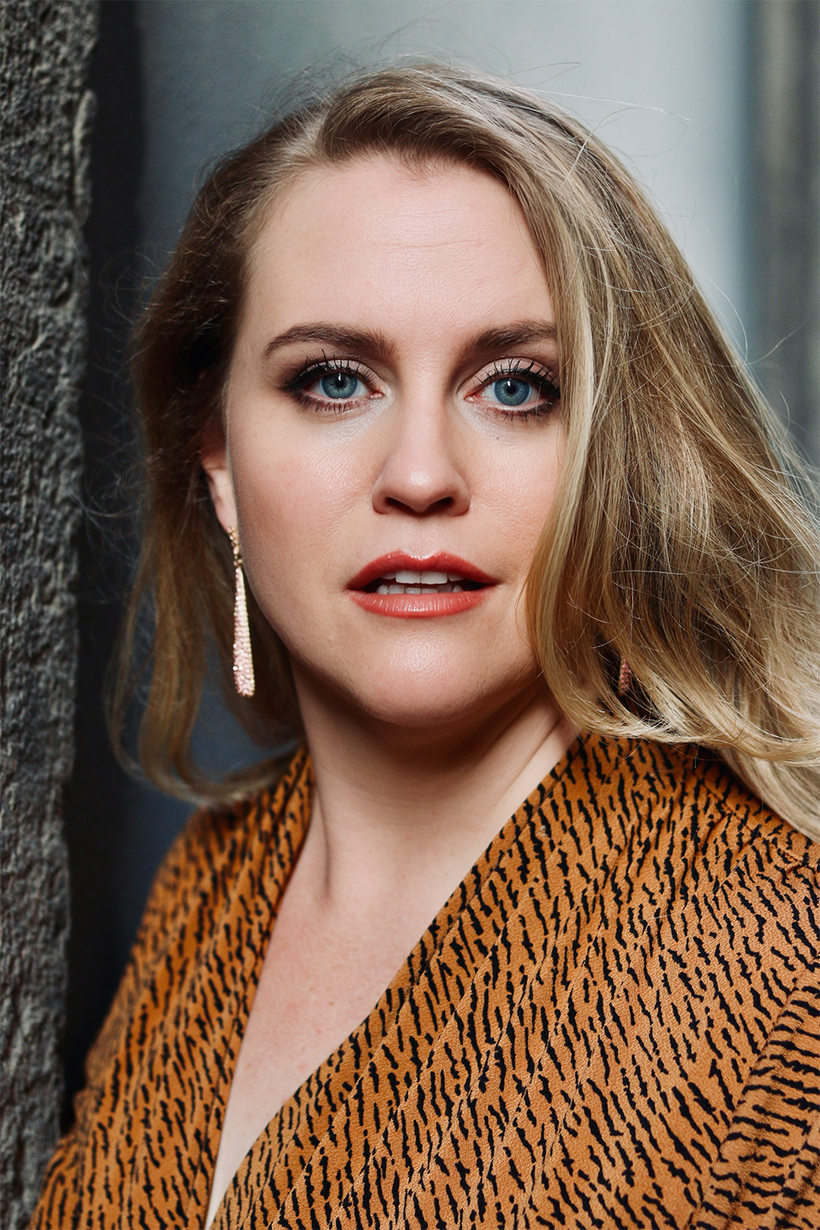
©Olivia Kahler
Few sopranos today command the operatic stage with the technical mastery, emotional depth, and radiant presence of Rachel Willis-Sørensen. To watch her perform is to witness a character come alive, fully embodied and breathtakingly human. Opera, for Willis-Sørensen, is a celebration of the artist being fully themselves, expressing their true voice, and inviting the audience into a shared moment of wonder.
Her approach to singing blends discipline with intuition. She cultivates healthy, tension-free technique, allowing her natural resonance and overtones to soar effortlessly over the orchestra. “Singing is unique precisely because it allows my own sound to shine when I sing healthily and without tension,” she reflects, demonstrating a rare clarity of artistry that unites physical mastery with emotional truth.
Onstage, Willis-Sørensen gravitates toward heroines who embody independence, resilience, and emotional depth. From the hopeful, multifaceted Arabella to the reflective Marschallin in Rosenkavalier, she brings nuance, humor, and gravity to every role, creating performances that feel intimate, human, and unforgettable.
Offstage, she champions both opera’s grandeur and its accessibility. Whether in timeless, maximalist productions or through HD broadcasts that bring the art form to new audiences, Willis-Sørensen celebrates the spectacle while honoring the connection between performer and listener. With every note, she exemplifies an art that is as thrilling as it is profoundly moving.
Operaversum: As Strauss’s Arabella will be broadcast on November 22nd from the Metropolitan Opera, what new insights into Arabella’s personality have emerged for you throughout the rehearsal process?
Rachel Willis-Sørensen: At first when I saw and started studying Arabella, I found the character quite cold and I did not feel a lot of immediate empathy for her situation because she seems kind of whiny like a little princess who has too many suitors and has to choose one boo-hoo.
But the more I studied the role, the more I realized she just doesn't need everyone to like her and actually that's an important feature of the Marschallin in Rosenkavalier as well.
She just is who she is and she's OK with being disliked even if people can't accept it. I think it's really telling that she insists on being with a partner only if there is love, mutual respect and forgiveness. And that if failing those things she will rather stay single which is a bold move for someone in their 20s. But she has somehow cultivated enough self-belief to make singlehood sustainable for her, which is very impressive and even exemplary.
Operaversum: Arabella’s world is steeped in elegance and nostalgia. How do you keep the storytelling fresh and authentic for modern audiences while honoring its period atmosphere?
Rachel Willis-Sørensen: In my opinion, it’s a mistake to assume that people in earlier eras didn’t feel the same emotions we do today. Yes, they lived among different buildings, ate different foods, and had slightly different cultural expectations — but they were still human beings.
They had hands and feet and eyes and noses and mouths, and they lived and loved just as deeply as we do. They experienced disappointment, they developed their philosophies, and they gathered hard-won pearls of wisdom over the course of their lives. So even though the opera has a nostalgic atmosphere, it still carries important lessons that speak directly to people today.
I personally learned a lot from this story, especially about maintaining my own sense of self and not collapsing into a partner. It also taught me how essential it is to insist on mutual respect in a relationship.

©Olivia Kahler
Operaversum: Strauss is often described as both exhilarating and technically demanding. How do you personally navigate the balance between vocal precision and emotional expressiveness in this score?
Rachel Willis-Sørensen: I think the funny thing about Strauss is that he was trying to set actual conversation, so Arabella ends up with these incredibly complex rhythms and what I would even call modulation inflation.
There are so many key changes in the opera on every page that you almost lose your sense of tonality altogether. Since Strauss was imitating natural speech, learning the groundwork allows you to be a little freer in your performance. At the same time, being strict with the score actually gives the listener the feeling of hearing real conversation.
That’s the interesting paradox: I’m trying to deliver it in a naturalistic way while still respecting every pitch and rhythm exactly as written. It’s no small challenge, but after a lot of work, I think it’s finally getting to where I want it to be.
Operaversum: Is Arabella your favourite Strauss role, or are there other works by him even beyond the operatic score that speak most deeply to your heart?
Rachel Willis-Sørensen: I don't know how to pick a favorite role, because I feel I’ve learned something from each of the heroines I’ve portrayed.
Arabella might actually be my favorite because of how she fits into the story of my life, as the timing of the lessons she teaches me lines up so closely with what I’m learning in the real world. Her story has so many practical applications that genuinely encourage me toward a deeper sense of joy and satisfaction in my own life. But I’ve also learned a tremendous amount from the Marschallin in Rosenkavalier.
I think Arabella is probably about twice as long, so there’s much more to sing. She is both funny and serious, and she is very hopeful, while the Marschallin is more resigned. But I love both of these Strauss heroines so much.

©Olivia Kahler
Operaversum: The Metropolitan Opera is known for its vast stage and unique acoustics. How challenging is it to project your voice in this house, and how do these acoustical conditions influence your artistic choices?
Rachel Willis-Sørensen:I think it’s dangerous for singers to focus on the sound they need to project. Basically, you can’t directly feel or hear what is heard on the outside, but you can sense the presence of overtones. So using overtones and harmonics with a relaxed larynx is the best way to be heard over a big orchestra.
Even if your voice isn’t actually louder than the orchestra, the human brain will “fill in” the sound you’re producing if you’re singing with strong overtones. So I pay attention to the sensation of overtones — the sparkle, so to speak — rather than what I’m hearing externally.
I would say I try to sing as healthily as possible, and I generally try to sing as softly as I dare. Singing at the Met doesn’t feel all that different to me. Sure, the hall is huge, but I try not to think about that. I stay very focused on the character and on singing in the most efficient, healthy way.
I’m told that my voice carries really well into the hall, but I don’t think it helps to focus on that. I just have to sing in a healthy way, trust the process, and trust the overtones.
Operaversum: Opera and classical music are evolving rapidly, not only through social media but also through initiatives like the Metropolitan Opera’s Live in HD series, which brings performances into cinemas around the world. How do you see these changes, both the opportunities and the challenges, shaping the future of the art form and the role of artists today?
Rachel Willis-Sørensen: In my opinion, the great thing about opera is that it’s grand — it’s maximalist. I think we make a mistake when we apologize for those characteristics. Productions like Otto Schenk’s Arabella are unapologetically operatic. The Met’s Zeffirelli La Bohème, which they’ve just refurbished, is another example.
These productions are old-fashioned, to be sure, but they also demand a very high level of acting quality. They even have long intermissions of 35 or 45 minutes. And I love that, because they’re not sorry for building an entire world on stage.
Opera is such a spectacle to behold. Things like HD broadcasts can introduce the art form to a wider audience. Thus said, Opera doesn’t have to appeal to everyone in the world, as it still reaches enough people to make it worth doing. HD broadcasts also give us easier access to productions we might not otherwise see, which is wonderful.
I know that for me, watching HD broadcasts of the Met allowed me to see many works I couldn’t experience in person, simply because I wasn’t living in a city where they were being performed. They’re a fantastic resource for young singers and for anyone interested in opera.
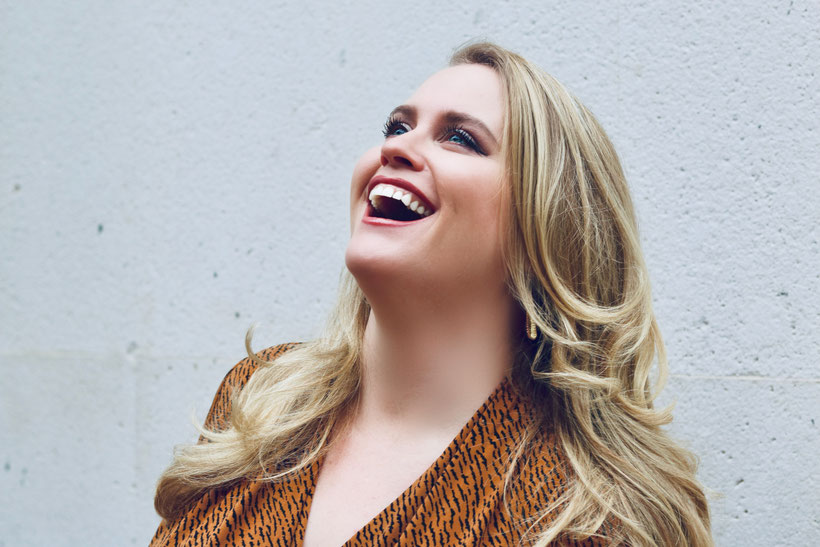
©Olivia Kahler
Operaversum: Looking ahead, which upcoming role debuts or artistic projects excite you the most, and how do they reflect the direction in which you want to grow as an artist?
Rachel Willis-Sørensen: I feel really lucky because there’s so much to look forward to, but I’m also coming down from an Everest of three massive title role debuts over the last six months: Norma, Thaïs, and Arabella. For a little while now, I’ll only be repeating roles I’ve already done, which is kind of nice, as each time, they get deeper at every visit.
At the same time, I have the opportunity in the next couple of years to introduce two new heroines I’m so excited about.
I suppose it’s OK to say — though I won’t say where, since the companies haven’t announced the programs yet — that I’ll be singing Anna Bolena and Tosca for the first time. These are two roles I can hardly wait to explore and get my voice around.
Operaversum: Your career has taken you to some of the world’s great stages. What has been your most beautiful or meaningful experience on stage so far, and what made that moment unforgettable for you?
Rachel Willis-Sørensen: Oh, it’s so hard to pick just one. I’ve had a few really memorable experiences. I would say singing Rusalka at San Francisco Opera in a beautiful David McVicker production is one I will never forget, and singing La Traviata for the first time in Bordeaux is another. These moments have meant so much to me. They’re just times when everything feels right, when the planets are aligned.
I’ve had thousands of moments like that, and what makes them unforgettable is the connection both to myself and to the audience.
When I feel I can communicate a role with the utmost sincerity, it’s like a metaphysical bridge is built between me and the audience members. They’re allowed to walk across the bridge and join me in the middle, and together we share this special moment.
There’s also something magical about the live element, the unamplified voice, the orchestra working together. That’s my favorite part of the whole experience. It’s happened so many times that it’s hard to pick a single favorite moment on stage.

©Olivia Kahler
Operaversum: What artistic message do you hope your performances communicate to the audience?
Rachel Willis-Sørensen: As long as I’ve been singing classical music, what appeals to me most is healthy singing — singing that is natural and authentic. The more I am able to fully embody myself and sing without tension, the more my individual sound can resonate naturally in the room.
If I try to manipulate my voice with affected or tense techniques to change its color or sound, it compromises the instrument. Singing is unique precisely because it allows my own sound to shine when I sing healthily and without tension.
It’s wonderful to realize that the best version of myself — the one I can ever truly be — is simply who I already am, rather than trying to be someone else.
Operaversum: For someone who has never attended an opera, how would you describe the magic of the experience?
Rachel Willis-Sørensen: Opera is a celebration of the artist being fully themselves, of expressing their true voice — at least, that’s how I interpret it. That’s my favorite thing about opera, and it’s also what a new audience member could hope to experience.
By watching an opera singer fully embody themselves, even through the lens of their character, the audience is invited to do the same: to fully embrace the opera singer´s authenticity. That’s the experience I hope every opera-goer takes away.
Operaversum: Dear Rachel, thank you very much for these in-depth insights on Arabella and your artistry.